
What Does “Estate Grown” Actually Mean?
By ONX Wines | The Journal
The short answer: “Estate grown” means the grapes came from vineyards the winery itself owns and farms. At ONX Wines, it means fruit from the Olson family’s organically farmed estate vineyard in the Templeton Gap of Paso Robles, where the same team that tends the vines makes the wine.
Estate Grown, Explained
When a winery calls a wine “estate grown,” it is telling you where the grapes came from: vineyards the winery owns and farms itself. The people who prune the vines, choose the picking date and make the wine are one team, working from one piece of land.
That sets estate grown wines apart from the many wines made from purchased fruit. Both approaches can produce good wine, but estate farming gives a winery something special: complete knowledge of its fruit and full responsibility for it, from vine to bottle.
You may also see the phrase “estate bottled.” That is the formally defined federal label term, and it carries specific requirements about vineyard control, location and production at the winery. “Estate grown” is the plain-language way wineries describe vineyard-owned fruit, and the best way to read it is alongside the winery’s own story of its land. At ONX, that story is easy to tell.
The ONX Estate Vineyard
The Olson family planted the first vines at ONX in 2005, on the western edge of the Paso Robles AVA in the Templeton Gap. Today the ONX Estate Vineyard spans 127 organically farmed acres, eight miles from the Pacific Ocean.
The site is the reason the wines taste the way they do:
- A natural cooling corridor. Marine air flows inland through the Templeton Gap. Summer days can reach the mid-90s, then temperatures fall 40 to 50 degrees by nightfall, which slows ripening and preserves natural acidity.
- Varied soils. The blocks range from calcareous limestone to clay loam, with changes in elevation and sun exposure across the property.
- Eighteen varieties on one estate. Grenache, Syrah, Mourvedre, Petite Sirah, Cabernet Sauvignon, Zinfandel, Tempranillo, Malbec, Petit Verdot, Viognier, Sauvignon Blanc, Picpoul Blanc, Grenache Blanc, Grenache Gris and more, with some original plantings dating to 2005 and 2006.
- Organic farming. Cover crops, composting and integrated pest management are standard practice, and ONX is completing a three-year journey toward CCOF organic certification, expected in early 2027.
The Olson family’s Swedish farming heritage runs through all of it. Their goal is to leave the land in better condition than they found it, and the estate’s resident sheep and goats are a happy part of that farm life.
Why Estate Grown Shows in the Glass
At ONX, estate grown is a daily practice. Winemaker Drew Nenow, a Cal Poly enology graduate who joined ONX as a harvest intern in 2015, now leads both the farming and the winemaking. The person who decides when to pick is the person who crafts the final wine.
Here is what that means for the wines:
- Picking decisions made with the finished wine in mind. Drew and Associate Winemaker Lauren Lange work in the vineyard and the cellar, so harvest timing and winemaking choices are made together.
- A true sense of place. The limestone and clay loam soils, the cool nights and the elevation shifts of the Templeton Gap are what you taste in the glass.
- Block-by-block winemaking. Wines are made vintage by vintage and bottled only when each one earns its place, from Grenache and Syrah blends to single-varietal Petite Sirah, Tempranillo and Cabernet Sauvignon.
- Room to explore. With 18 varieties planted on one estate, the team also works with less common grapes such as Gamay, Counoise, Vaccarese and Tannat.
- A long-term commitment. Farming the same land for two decades means every season builds on the last, with healthy vines and thriving soils at the center.
Drew’s approach is hands-on and rooted in the vineyard: if the farming is right, the wine follows.
Frequently Asked Questions
What does “estate grown” mean on a wine label?
It means the grapes were grown in vineyards owned and farmed by the winery that made the wine.
Where is the ONX estate vineyard?
It sits in the Templeton Gap, on the western edge of the Paso Robles AVA in California’s Central Coast, about eight miles from the Pacific Ocean.
How big is the ONX estate vineyard?
The ONX Estate Vineyard covers 127 acres and is planted to 18 varieties. ONX also farms a 55-acre vineyard at Kiler Canyon in the Willow Creek District AVA.
Is the ONX estate farmed organically?
Yes. The estate is organically farmed, and ONX is on track for CCOF organic certification in early 2027.
What is the difference between estate grown and estate bottled?
“Estate bottled” is a formally defined U.S. label term with specific requirements. “Estate grown” is the everyday phrase for wine made from a winery’s own vineyards.
Can I visit the ONX estate?
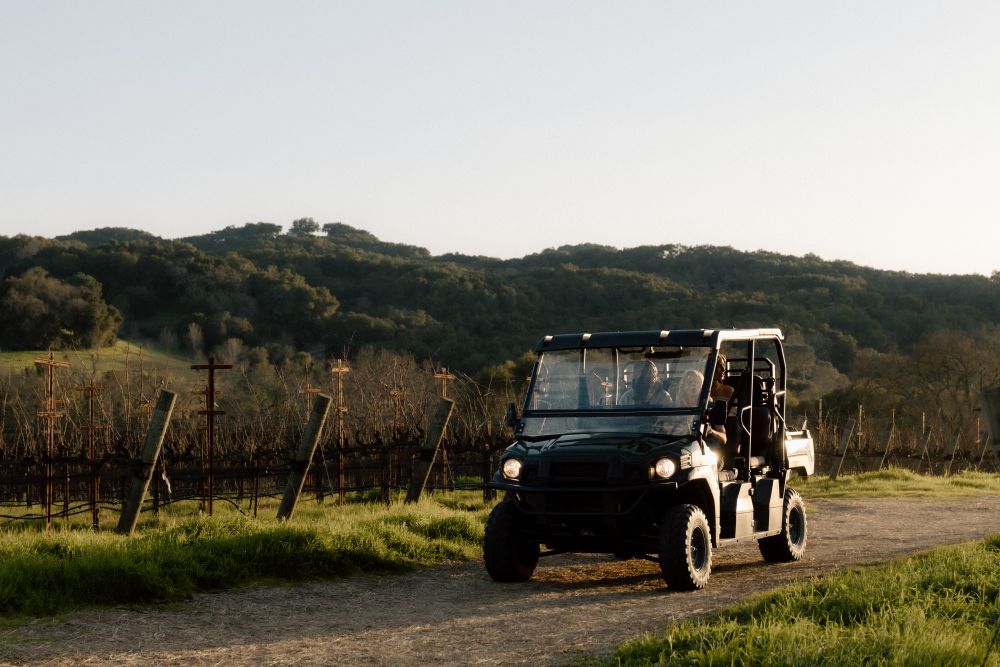
Yes. You can taste at the Tin City tasting room, take an off-road vineyard tour through the vines with wine in hand, or stay on the vineyard.
The Bottom Line
“Estate grown” is a promise about origin: the people who made the wine also grew the grapes. At ONX, that promise is backed by 127 organically farmed acres, a winemaker who leads both vineyard and cellar, and a family that has tended this land since 2005.
Ready to taste the estate? Shop ONX wines, plan a visit, or join the Collective.